The Blessed Option
With Sean publishing The Blessed Option and launching Thumb’s Width Publishers, we thought it was only fitting to discuss Sean’s new book and point people to where they might find an opportunity to maybe get a copy at some point.
AND, check out the new All Are Yours website, with information about the All Are Yours Conference happening April 16-17, 2027.
(Please excuse some of the excessive beating noises. It so happened that Philip had roofers working right above him at the time of this recording).
Newly published
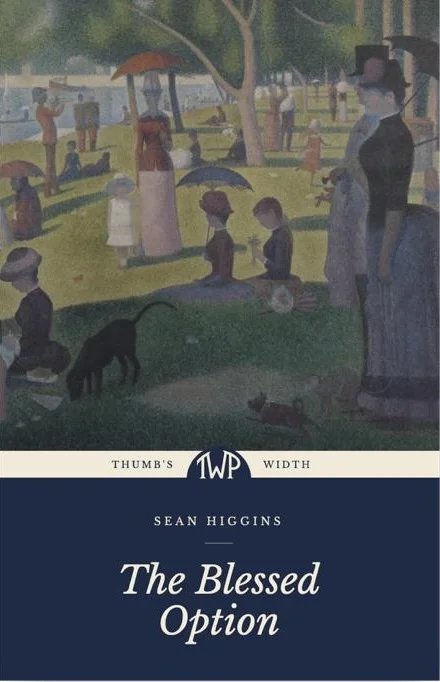
Thumb’s Width Publishers
The Blessed Option
Christians confess that Jesus is Lord. How, then, should we live while we await His return?
Build, battle, or just preach the Bible? There is another option that includes the best parts of all three.
Transcript
This was AI-generated, expect errors. Ha!
Philip Wait a second. Wait a second. Are you saying it is all are yours?
Sean It’s almost as if all are yours.
Philip Somebody should have a podcast with that name.
Sean Almost like that, right?
Philip Maybe a conference too.
Sean Wait, that would be a fantastic idea.
Philip Yeah.
Sean We could talk about these things even more, and how we don’t have to be fettered.
Philip Oh, man. Oh.
Sean We can be unfettered in receiving these blessings.
Philip Boom. That’s to mess up, you know, what you’re expecting to hear. You were expecting to hear, “All right, welcome to All Are Yours,” but you didn’t hear that first. So, yeah. Boom.
Sean Boom is usually how you end.
Philip Oh, dang it.
Sean So we’re just reversing it. It’s the upside-down episode.
Philip That’s right. That’s right. There you go.
So — all are yours, we’re back. Me and Sean, Sean and I, both of us are here doing the normal stuff. We are actually both too busy to be doing this, but we love it. We love it. So that’s why we’re here.
Sean The gospel says death brings life.
Philip That’s right.
Sean I’m not sure what podcasting brings. But if we were to take it up a level and say that recording the podcast is a kind of dying for the sake of bringing life —
Philip That’s right.
Sean Maybe there’s a way around it. We could say podcasting brings life.
Philip There you go. That’s right. Podcasting brings life.
And we’re not reluctant. Like, we love it. So we love dying to bring life. That’s —
Sean Yeah, I changed my mind after that very first one.
Philip That’s right, yeah.
Sean It’s been a while, probably, since we talked about it, because — when was the first one? 2023?
Philip Was it?
Sean You know what is fun? Right now I am going to allareyours.com.
Philip Boom, people. Boom.
Sean Which is alive. So, our first step — because you can go to that website, which is talking about the conference, which we’ll talk about more later as well. But now you can actually see all of our podcasts. There are 34 episodes, so this will be 35, right?
Philip That’s right.
Sean There are 34 episodes. You can watch any of the episodes on YouTube. You can listen to any of the episodes. And at least as of the moment, you can even read the transcript of all the episodes. I’ve still got a few more to post.
Philip That is boomworthy. Boomworthy.
Sean But then that also means you can search.
Philip That’s right.
Sean So if there’s a word that you heard and you want to know what episodes we talked about — chiliasm, that’s actually in there. Theonomy — boom, you can search for that by word. But yeah, so that enabled me to find out very quickly that our first episode was November 22nd, 2023. And I do remember listening to that and acknowledging that I sounded reluctant.
Philip There you go. So if we get to episode 36, that’ll be three years, which makes sense.
Sean Wow.
Philip Thirty-six. There you go. Boom.
So, and yeah, on that — I mean, that search feature on the podcast website is like the best search feature —
Sean You’ll have to try it.
Philip — experience. A little bit, yeah. I mean, you could search the words, and if you remember, like you said, “Hey, they talked about some word at some episode. I don’t remember what they said here” — and you search it, because the transcripts are on there, it’ll pull that up. So that is really cool.
Sean Thankfully, Claude is fixing a lot of things, because I’ve got an app that does the initial transcribing and then speaker identification, because that seems important, as opposed to —
Philip Yeah, I don’t want to have to do that.
Sean Exactly. We want to honor who deserves honor, criticize who deserves criticism. But yeah — then what would it show me today? I think it spelled theonomy six different ways, and none of them were correct.
Philip Okay.
Sean So then when I ran it through Claude to have it clean it up —
Philip Yep.
Sean — which Claude then also remembers some personal names and then will fix those going along. We talk about Lectures on Calvinism a bunch, or Robert Capon or whatever, and thankfully Claude remembers a bunch of those, and then turns book titles into italicized. That’s good.
Philip Yeah.
Sean Whatever. But yeah — so search for a word, and it’s fairly accurate.
Philip Yeah. We had episodes about utilizing AI in a way that is productive, and so that’s part of what — you know, we are not just talking about that. Sean is very much embodying that within this All Are Yours podcast framework. So it’s Sean, me, and AI. That’s what it is.
Sean I think that that could be our next book. That could be our first co-authored book together.
Philip There you go. That’s right.
So, speaking about projects, getting things released, and books — I have in front of me here the, we’re calling this the author’s copy, right? Of The Blessed Option. By the one and only Mr. Sean Higgins.
Sean The old guy.
Philip The old guy. Should have put that on the author line here — “the old guy.” So, another boom. Boom, there you go.
The Blessed Option. So we wanted this episode to, you know, like, interview the author. That’s what we’re doing here. Talking a little bit about the book, the worldview behind it, the why behind it, the movement that this is launching, and all of the things connected to that.
And then there’s even some more, you know, because if you noticed on the book — who published it? Thumb’s Width Publishers. Like, who is that? We’ll talk about it. That is the publisher to know.
Sean There’s a release party like in every —
Philip Correct. Very much so. Yes, that’s right.
So, in your intro — if I could get into it and then just set you up to talk a little bit about it.
Sean Do it.
Philip In the intro of The Blessed Option, right, you mention a few different options. So you first have the Benedict option. You have the Boniface option, you have the bunker option, and then, like every good seminary graduate, you have the blessed option. So the alliteration is there for you right from the beginning.
Sean This isn’t even forced alliteration.
Philip That’s right, correct.
Sean I’m not the one who came up with the Boniface or the Benedict option.
Philip Or even the bunker option. I mean, that is a thing that particularly dispies are, in some sense, accurately accused of — you know, having a bunker mentality. So yeah. And even the blessed option — there, also, you didn’t make up that word, and there’s a certain context there too.
So this is, like, God’s providential alliteration here. That’s what this is. So there was only one name for this book: The Blessed Option.
But maybe you could open up a little bit about the Benedict option, the Boniface option, the bunker option, and why, having so many options, you still thought that we needed another one. We needed a better one.
Sean Because that’s how you make money.
Philip Is —
Sean You come up with your own fake idea to write a book and sell it.
Philip Exactly right. This is what this is about.
Sean I actually think that you were the one who even suggested that the blessed option might be a good title for the ideas. I definitely remember thinking of the blessed option and presenting it even that way, but I was presenting it under sort of another theme, or another kind of juxtaposed phrase that stands out — I mean, that we’ve talked about even on this podcast before.
But yeah, blessed option. “Blessed” is definitely one of those words, one of those Bible, ancient words, that largely means nothing to most people who use it, when they take their pumpkin spice latte into Hobby Lobby looking for the hashtag-blessed —
Philip That’s right, that’s right.
Sean — shiplap kind of wall decoration. Exactly. Yeah, hashtag blessed. Which I embrace. I think that that is sort of playful and funny, to do the hashtag blessed.
Philip I mean, old guy, white girl evangelical — like, very close.
Sean Hard to distinguish pictures. Corporate needs you to distinguish these pictures.
Philip That’s right.
Sean Yeah. But from the beginning — in fact, in Genesis 1:28, which we usually think of as the cultural mandate: be fruitful, multiply, fill the earth, take dominion, and subdue it. I love to look at the very beginning of Genesis 1:28, because before any of the commands, the very first phrases, or even first sentences: “And God blessed them, and God said to them, ‘Be fruitful, multiply,’” and the rest.
So even on the day that God made man and woman in his image and then gave them a mandate — for at least the garden work, and then ultimately to fill the earth — that began with God’s blessing.
The first word in the book of Psalms is blessed. Blessed is the man who does not listen to scoffers and sit with the sinners, but his delight is in the law of the Lord, and he meditates on it day and night, so that he’ll be like a tree planted by streams of living water, and his leaves are green, and fruit comes in its season. Like, that seems to be part of the blessing.
Or — I think one of the first psalms that our community learned was “Bless’d the man that fears Jehovah.”
So God is actually the God of blessing. God is after blessing his people. Figuring out what that means — Jesus’ most well-known sermon begins with the Beatitudes: blessed is this kind of person, blessed is this kind of person.
So blessing is all over, and it seems like a good way to think about what God’s attitude, or the overflow of God’s heart, is toward those who love him, fear him, worship him, trust him, love him. He blesses.
And this looks like a bunch of different things, including a bunch of different things that are tangible, not only spiritual. Because Ephesians says that he has blessed us with every spiritual blessing in the heavenly places. So that part is true. But a bunch of the other blessings are on earth.
And that sort of stands against what the Benedict option was trying to describe. I could look in the book and find out if I put what year the Benedict option came out. But you know — Saint Benedict, and we read the Rule of Saint Benedict even in one of the Omnibus classes at ECS. Yes.
But basically, rules for monks — and observing that monks actually preserved a lot of culture. So, not trying to throw monks under the bus, and what they missed to begin with, at least. But in light of how bad our culture is, Rod Dreher wrote that perhaps we should consider sort of protecting ourselves, if not hiding, to a degree, in our faith communities, churches, schools, families, so that we can preserve what is good about the faith, so that we have something to pass on to the next generation.
But basically you kind of go away, out of the mainstream, out of the craziness of the dark culture, and preserve things so that when culture implodes — secular culture implodes — we can come back out and we’ll still have survival. The Benedict option is easy to exaggerate and say, you know, go be Amish, go get off the grid — and that’s not actually what he’s arguing. But it is still more of a preserving, to be proactively preserving, rather than trying to fight and win a culture war.
Which then obviously irritated a bunch of other young men. And so, picking a different monk, named Saint Boniface. Boniface’s most famous story — or at least the one that the Boniface option is named after — is when he, as a missionary, went to a group who was worshiping at an oak that I think was the Oak of Thor. And Boniface was tired of them not listening to him, so he took an axe and chopped down their idol, chopped down their tree.
So this is supposed to be representative of not hiding, but completely fighting. You know, everything you say needs to shift the Overton window toward something more conservative — conservative, whatever it might be, you know, honoring Christ. Boniface fighting in Jesus’ name.
Of course, the problem with selecting that and calling it the Boniface option is that Boniface did actually suffer a lot, and he was actually killed later on as a martyr. So —
Philip So —
Sean — he was bold at appropriate times, but also humble in other times.
Philip And Boniface did a lot of political pragmatism kind of work within his own context, even to build certain kinds of institutions or networks to be able to get the church rooted, planted in there. So he had to chop down the tree, but then had to kind of work within a certain context that, you know, maybe some young purists would not be as excited about.
Sean Sure. Yeah, so the Benedict option maybe is more toward a pietistic, retreatist sort of mindset. The Boniface option is definitely toward the belligerent, aggressive, fighty mindset. If they were on a spectrum, they would be on opposite ends.
The bunker option is kind of an even more extreme version of the Benedict option, where — you know, again, playing off of dispensationalists who are waiting for the rapture, or the Cold War nuclear bombs to come. And so you’ve got your nuclear fallout shelter bunkers —
Philip Right.
Sean — where you can live for however many years until, you know, the nuclear results have dissipated.
Philip Right. The bunker option is just hiding and waiting.
Sean Right, yeah. Because the picture on the front of the cover of The Benedict Option is Mont Saint-Michel in France, which is a glorious community — but yeah, they did have life among them, and different sorts of, you know, beyond just reading books all day or copying books as the scribes would do. Yeah, they had business.
So there was a kind of building, even if it was just for themselves. And yeah, the Boniface — much more the battling instead of the building. Though obviously, like you said, Boniface option people would talk about building things.
Bunker — yeah, ultimate retreating, as in, there’s nothing in this world. We are waiting for the last helicopter out of Vietnam. We are just trying to get off of this hellish planet and get ourselves into heaven. Like, there’s nothing for us here.
And even as much as I love John MacArthur, multiple times he stressed that the only reason God left us here on earth was to evangelize. And —
Philip Mm-hmm.
Sean — I think that that is too narrow. And that’s like yelling the gospel out of your bunker.
Philip Right.
Sean So that people could join you in your bunker, waiting for Jesus to come back.
So I have, in different ways, been sympathetic to all of those positions. And there are parts of them — again, without exaggerating each to its extreme — there are parts that resonate. But it was especially trying to figure out how, if it was possible, for a dispensationalist to be Kuyperian, and what that would look like. That’s where then the blessed option really came from.
Philip Yeah. Yeah. You were just looking to have more fun, and you needed an excuse, or somehow to justify that.
Sean It’s hard to restrain myself from wanting to have fun.
Philip Yeah, that’s right. Fun is your middle name, you say.
Sean Yeah.
Philip So there you go. Yeah, so maybe, before a little more about the blessed option — for people who maybe have not heard it before, what about your own kind of theological journey? Like, you know, as you then — if the end of it is you arriving at this blessed option, and then opening the door to that wide, wide world. How did you get there? Where did you start, in your theological understanding?
Sean Yeah. Because I think — I mean, I was baptized when I was seven, so I prayed the prayer to receive Jesus and I got baptized when I was young, and our family always went to church. I was actively involved in our youth ministry when I got into high school. And then the summer before my senior year of high school — this is its own story, but I started having the desire to be a pastor.
So I started pursuing that, and even went to the first of three Bible colleges I was going to go to. Hurt my back pretty significantly and was laid up the summer between my freshman and sophomore year of college. And I read books related to Calvinism. And nobody had used those words around me before. I was not familiar with that theology, or even that discussion between Calvinism and Arminianism. And I was hooked. And people thought I was crazy, that were around me. But God’s sovereignty in salvation not only made sense from Scripture, but it even satisfied some of the concerns in my own heart about — so, you know, why would God need to be obligating himself to my choice?
So there were worship reasons why it worked, there were emotional benefits, there were some logical pieces that got put together — most of all, that seemed consistent with God’s Word.
So I was a Christian, then I thought I wanted to be a pastor, then I became Calvinistic. At that point, I really started to care about theology. And the rest of the world seemed not just useless, it actually seemed wrong. So —
Philip So —
Sean — reading the Bible, reading theology — fiction was then crazy. And we’ve talked about, you know, on the podcast before, even, I had to repent from not appreciating the gift of fiction, and a bunch of other things.
But so then I finished Bible college and I went to seminary, and I went to a seminary that loved God’s Word. And at the same time, we mostly studied and stuck ourselves in the New Testament, and probably even more than anywhere else, in the epistles. Which again, to some extent, makes sense in our age, where the epistles are instructions for churches, Christians in church, what churches are supposed to love and do and hold on to.
Again, to some extent that makes sense. But even then, when I graduated from seminary and I started being a youth pastor, I was like, well, there’s a lot of the rest of the Bible that I think even our students would benefit from. And the main pastor at the church I was going to at the time, he was teaching in the New Testament. I was like, well, maybe I’ll do Old Testament with the students and at least give something different.
Ecclesiastes was the closest to a letter that I could think of, so I chose Ecclesiastes. It was great, life-changing. And one of the things from Ecclesiastes that started to gnaw at me was Solomon and his wisdom. Described how there was nothing better than to eat and drink and find enjoyment in your toil, for this is from the hand of God. And to the one who pleases him, God will give wisdom and knowledge and joy.
And I was like, wait a second. “To find enjoyment in your toil” does not sound like you eat and drink and find enjoyment in your blind diagramming of Greek verses, or your reading of thousand-page theology books. It kind of sounds like, find enjoyment in your toil, whatever your toil is. And that that is where, then, when you fear the Lord and you please him, he gives wisdom and knowledge and joy.
And I wouldn’t really say I was super joyful, either. Like, that’s not how I woke up in the morning, just being joyful about the day’s tasks. It seemed like Solomon was describing the option to have joy in things on earth.
And that was messing with me. That was messing with my — you know, looking back now, a kind of dualism, where what God likes are the spiritual things, and what God does not like are the temporal, earthly, physical things. So these are lesser — the temporal, earthly, physical things are lesser. It’s the invisible things that are the greater.
I finished Ecclesiastes. I still was working on that. I wasn’t settled, but I still wanted to stay in the Old Testament. And then I went back to start Genesis. And yeah, Genesis 1 not only rocked my world, but built a new foundation.
It was also during that time when our oldest kid was needing to start school. And so my wife had me start reading some books. And that was all working together. But in particular, from Genesis 1 — you know, maybe the most important word in Genesis 1 is good. God looked at what he had made and he called it good, and he kept calling it good, good, good, until the very end, when he saw the man and woman, and it was very good when they were together, by the time you get into the retelling of that specific piece of the story in chapter two.
And I realized I was not calling good what God was calling good. God was the one who made the earth, the trees, the animals, relationship even with husband and wife. You know, that wasn’t just a thing that he made as, like, a necessary but distasteful piece of his nature, or of God’s own interests. Even the blessing that he describes of being fruitful and multiplying, and having responsibility — these were categories that I was not operating in.
I was operating in very narrow Bible — you know, whatever the right word is: pietistic, dualistic. I was wrong, and was missing out, then, on what God was giving as blessing. So I had too narrow of a definition of blessing, and that was from largely getting stuck just reading and preaching epistles. Which we still need. But, you know, most of the people who read the epistles had the Old Testament, at least had the Psalms, as sort of a foundation. So the epistles don’t tell us to ignore the Psalms. They tell us, if you’re filled with the Spirit and the Word, you’re going to be singing psalms and hymns and spiritual songs.
So the categories of blessing and good that God, even over and over and over again in the Psalms, or again all the way back to Genesis, describes as what his blessings are — that radically changed my view, again, then, on what is good. And there’s a bunch of good things on earth.
Philip Mm-hmm. Yeah.
And during that time, maybe you did have some of these thoughts — or maybe you could answer to somebody now who would have these sorts of thoughts, where: yes, but the physical world is, you know, Old Testament, that’s Israel. The church is a spiritual institution. The church is a spiritual reality. Our home is not here. So all of the physical blessings, you know, that’s Israel, that’s Old Testament. We are to look to the spiritual blessings, the spiritual things.
Did you struggle with that sort of thing? Or if not, or you’ve already arrived, how would you answer somebody who is maybe pushing back in that sort of way?
Sean Sure. I think that there’s potentially a few different observations there, including: why would we, as New Testament church Christians, why would we benefit then from singing psalms and hymns and spiritual songs, if not actually to realize what some of the blessings are supposed to be that we receive — which are not, again, just later, not just heavenly, not just celestial and in eternity after we’re dead or after the rapture or whatever. But we’re actually supposed to get our understanding of what’s good informed by some of those things.
In addition, it was especially in Romans 11 that the description that Paul gives of how Israel is eventually going to be saved — what God is going to do to provoke them to return to Christ is the blessings that are coming to the Gentiles.
And, well, which blessings? And the more that I wrestled with that, the more it seemed like, well, the blessings that would make Israel pay attention are not just that we have really good Friday night Bible studies. Now, maybe that’s a part of it, you know. We have good community, we sit around, we talk about what Scripture means. That part is good.
But the kind of blessings that in particular Israel would recognize would be the kind of blessings that were promised to them in Deuteronomy, especially, where if they obeyed the covenant, then God would bless them; if they didn’t obey the covenant, then they would be cursed. And in fact, most of them are currently not obeying. And so, are they cursed? They’re under judgment.
But the Deuteronomic blessings are very tangible. They’re very, very good. And so the things that would provoke Israel to jealousy — and that is Paul’s word that he uses multiple times. In fact, at the end of chapter 10 in Romans, God says, “I will make you jealous with a people who are not a nation.” And then twice in Romans 11 Paul uses the word: “I magnify my ministry so as to make my fellow Jews jealous.”
And I then use the word jealousability. God is giving jealousability to his people via his blessings. Again, what blessings are we talking about? Well — forgiveness, clean consciences, eternal life, knowledge of the truth, in particular knowledge of him. And, you know, knowledge of his Son and him, which is eternal life. But then also the kind of blessings that would be visible, tangible.
Or even blessings of suffering. Well, we consider those blessed who remain steadfast under trial. Lots of verses explicitly connect blessing to those who suffer well. So whether you’re succeeding in visible, obvious ways, or you’re suffering in ways that can’t be explained other than by God’s grace that is strengthening and enabling someone to follow him — so both in success and in suffering, there are tangible blessings that are visible, that then would be provocative to God’s own purposes in fulfilling his new covenant to bring back Israel.
So the dispensational part of me that knew God still had a plan for Israel needed to meet the Kuyperian part of good things on earth. You know, it’s all the thumb’s width. God cares about every thumb’s width, claims it as his own. That it is those kinds of blessings that God then uses, sort of, as the key in the eschatological lock. Or the other illustration that I use is, like, the cue ball that breaks the rack.
And these are blessings — hence the blessed option. Like, that gets it all the way back around. So what should we be pursuing as Christians, you know, in training our kids, in loving our grandkids, in trying to think about even culturally what our options are? Well, it should be to seek and then magnify God’s blessings that he gives us. And understand that’s powerful and provocative. Our jealousability that God gives us is gonna win. It’s gonna work. That’s actually his purpose. That’s not just us making up what sounds good. That’s not a new prosperity gospel. That’s actually the purpose of the gospel: to bless us unto then bringing back the Jews, at their right time, to love and serve Christ.
Philip Yeah.
Sean Now I can hear your rebuttals.
Philip Okay. Yeah.
So, I mean, comparing it with the Benedict option, Boniface option, bunker option as well — it seems like the question that all those different options are answering is, how should we engage with the world? How should we engage with the culture? Right? What should the Christians who want to be faithful — what should that engagement look like?
And so you’re putting forward also a certain kind of engagement, right? A way to approach the world, a way to approach whatever kind of environment that you live in, whether it’s western Washington, Seattle, whether it’s Florida, you know, or some red state that is friendly.
So, a certain kind of way to also engage with the world. How does it compare, then, to the Benedict option, Boniface option? Is it a third-wayism? How does it relate to those different sorts of options in your engagement approach?
Sean Yeah. Because third-wayism usually gets mocked pretty significantly.
Philip Right, right.
Sean It’s kind of having the best of all of them. And actually not limiting to one or the other end of the spectrum.
Philip Wait a second. Wait a second. Are you saying it is all are yours?
Sean It’s almost as if all are yours.
Philip Somebody should have a podcast with that name.
Sean Almost like that, right?
Philip Maybe a conference too.
Sean Wait, that would be a fantastic idea.
Philip Yeah.
Sean We could talk about these things even more, and how we don’t have to be fettered.
Philip Oh, man. Oh.
Sean We could be unfettered in receiving these blessings.
Philip Yeah. So — but yeah, so you’re saying both of those things, all those things. What does that mean?
Sean Sure, yeah. Well, because we are both building and battling. And I get that it can be cliché for Christians to consider Nehemiah’s guys building the wall — you know, they had a trowel in one hand and a sword strapped by their side, or a sword in the other. Even Spurgeon’s periodical, you know, The Sword and the Trowel, bringing that together.
So you’re building and you’re ready to fight, or you’re fighting and then you go back to building. I think that it protects a person from feeling like everybody has to be an enemy, or that then, to be successful, you gotta turn them into an enemy. We do genuinely have enemies, and they should be resisted. We should try to win, absolutely. But the Boniface option suggests a sort of, like, can’t-get-away-from fighty-fighty-fighty-fighty-fighty, and everything becomes a fight. And that’s actually not fun.
Whereas to kind of get stuck in the Benedict option is a little bit more, well, those other things don’t matter, and we’ll just preserve whatever we can. And, you know, it’s perhaps too quiet, as opposed to too loud.
Philip Mm-hmm.
Sean Mature Christians are actually supposed to be ready for both. There is a time to speak and there’s a time to be quiet. There is a time to fight and a time to stop fighting. There is a time to build, and then a time when actually something else is on fire and you need to go put that out. So mature Christian living includes all of those things. And there are some seasons where one is required more than another.
And the blessing part, in particular, requires looking to God to provide that blessing. We are not the ones who produce blessing. We are recipients of blessing — whether then we’re fighting, or we are preserving something, or promoting something else.
But the blessed option allows for putting it all into context: it has to be from the Lord. “Bless’d the man that fears Jehovah. He gets to eat of his hands’ labor” — that’s building. “He also sees his children’s children” — you know, that’s generational. These are blessings that the Lord promises.
Also, in Hebrews 11, near the end, when the author of Hebrews is kind of giving the lightning round of those who were living by faith, of whom the world was not worthy — some of them conquered kingdoms, and some of them were sawn in two. Well, which one was blessed? Well, both categories were blessed.
So you don’t have to just be only winning all the time, never any losses — it’s Boniface-optioning — to be faithful. And at the same time, just constantly whining and moaning is not the same as being blessed, either. So a lot of the bunkering types are sad, mopey, you know, sad sacks, who don’t even know joy or the goodness of the gifts that God gives them. And — good reasons to avoid both of those things, if you put it into context of the blessing.
Philip So it’s kind of like, you know: under, in submission to God, have as much fun as you can have, and let other people see you doing it.
Sean Sure.
Philip Like —
Sean Yeah, the — when we live by faith. Vivā fide.
Philip That’s right.
Sean Live by faith. When we fear the Lord, there’s wisdom. And that wisdom has results. So faith comes out in fruitfulness. Wisdom comes out in what you do, not just stuck in your head. So the faith, the fear, unto fruit.
In fact, on the back cover of the book I define blessed as “privileged with divine favor for fruitfulness.”
Philip Those are fighting words.
Sean Sure. But it means, you know — divine is key. It’s got to be from the Lord. It’s his favor, his joy, his generous love toward us, that gives us good things, that then is visible in some way in our fruitfulness. Again, whether that’s fantastic suffering — we are comforted in all of our afflictions so that we can comfort others; that is a blessing — or it is more, you know, your harvest came in fantastic this October, and the barns are full and you’re ready for winter, kind of thing. So all of these are fruitful things that make us jealousable, that start from God’s blessing.
Philip Mm-hmm. Yeah. So it’s not “check your privilege,” it’s “own your privilege.”
Sean Yeah. Get more.
Philip That’s right, get more. That’s right.
Sean Well, because where are we told that blessing should stop? Like, “Well, ask for this much blessing, but don’t get greedy.” No — if you’re actually getting blessing from the Lord, then there isn’t a limit. So, no: thank you, Lord, for the blessing. I am back for more.
Every Lord’s Day when the church gathers together, we’re gathering to bless his name and then for him to bless us. And there’s no restriction on that. There’s no limit on that.
Philip Yeah. I mean, you know — make the Jews jealous. Like, the original Israel wrestled God and wouldn’t let go until he blessed him. So he was, in some sense, even — had some audacity. Like, had some kind of in-your-face-ism, to be able to hold on to God even when, you know, the angel said, “Let go.” It’s like, “No, not until you bless me.” So that seems like a little bit different approach than “Okay, I’ve had enough.”
Sean Right. And it’s different than postmillennialism. It is wanting the visible, tangible, obvious blessings from God in a way that he does promise, that we shouldn’t get wrongly satisfied with. We should be satisfied in terms of being content, but we should want more and more and more of his blessing.
That’s different than saying we’re going to then prepare the earth for Jesus to then come back and get it. We still think that the great blessing is the return of Jesus, when he defeats his enemies — though there are some enemies that are defeated as part of our jealousability along the way.
So it’s not postmillennial. It’s certainly not amillennial, which, if it’s consistent, has to acknowledge the spiritual nature of the blessings more than the physical ones.
Philip Right.
Sean So if the promises are being fulfilled spiritually, then the blessings that we’re looking for are spiritual blessings.
Philip Right.
Sean Dispensationalists, premillennialists, are actually the ones who claim — and we should try to be consistent here as well — well, we’re the ones who claim God cares about national Israel and physical land with boundaries described. So we’re actually the ones who, instead of just hiding out in our bunkers, we’re actually the ones who should be able to recognize good fruit means good fruit. Not just good fruit in my heart, good fruit in my thoughts —
Philip Yeah.
Sean — should actually be able to be demonstrated, magnified in front of others, who then should want to seek the same sort of blessings from the Lord.
Philip Yeah, yeah. And you mentioned Hebrews 11, the hallmark of faith, and the different kinds of outcomes of what that looks like. What role does faith have in the blessed option? Vivā fide — what role does faith play in pursuing the blessed option?
Sean Yeah. Because even in Romans 9, 10, 11 — what was the problem with Israel is that they pursued righteousness that was by their works, not by faith. So in some ways Romans is entirely about salvation by faith alone, that then does have fruit that comes from that faith that saves. So justification unto sanctification, which leads to glorification — but all of that is received by us, not worked out by us. It’s worked out from faith, rather than faith plus works, or just works by themselves.
So Israel was trying to get God’s favor by working for it, as opposed to fearing him and believing him. So it’s entirely by faith. The blessings that we’re given are not because we deserve them. The blessings are because we trust God and are worshiping him instead.
So yeah, faith is the key to the whole thing. Faith is key to Kuyperianism. Like, how can we know that Jesus actually claims that he’s Lord of all the things? Well, we receive that by faith — if we trust that he knows what he’s doing, and that we’re serving him with the various daily responsibilities that he gives us.
Philip Mm-hmm. Yeah.
And so, I mean, the question for people, right? Like, you’ve talked about it, I’ve shown them at least the author’s copy. So somebody’s like, “Hey, I want to get in on some of that.” How do they do that? How can they do that? Can they do that now? Maybe they’ll be able to do it in a year. Maybe, you know, before the rapture, at some point.
And maybe that’s also a little segue into the publisher. Like, who is this publisher? What is all that about? You’ve mentioned Thumb’s Width even in some of the stuff you said here.
Sean Yeah. You know — why not? If it’s all made up —
Philip That’s right.
Sean — well, then we’ll make some things up.
Yeah, so we’ve started a thing called Thumb’s Width Publishers. And you can actually go to that website currently — thumbswidthpublishers.com. It only has one book, and that’s called The Blessed Option. Yeah, in fact, that’s the cover that is on the main page currently.
There are already some other books that we have intentions to prepare and get printed. I have actually reached out to somebody else to try to take over copyright and become the publisher for a book that is out of print. But we’ll see how that goes. But we’d love to do some of those kinds of things. There are some public domain things that have not yet been taken up by other publishers that I think Thumb’s Width Publishers could get out. But we’re just at the beginning.
Yeah, Thumb’s Width Publishers is from Kuyper’s famous quote, that there’s not one square inch in the entire domain of human existence over which Christ, who is sovereign over all, does not cry, “Mine.” And the Dutch phrase is probably better translated as “thumb’s width” instead of “square inch.” So, Thumb’s Width Publishers.
Even on the back of the book is my thumbprint. So that’s a cleaned-up version. I don’t know if you could, like, put that on my phone and, like, get into it.
Philip Safety deposit box.
Sean Yeah, it doesn’t have quite that quality to it, but it’s kind of cool.
Philip Yeah.
Sean One of my kids suggested that if we can publish some other authors through Thumb’s Width Publishers, maybe it’d be cool to get their thumbprint with their name, you know, in any given book. But yeah, we’re still at the beginning.
There are other publishers. I could have tried to get some other publisher to take up The Blessed Option, and I have considered that. But these days publishers are primarily good for marketing.
Philip Right, right.
Sean And I’m not really trying to make a bunch of money. I’m actually trying to give people what I think is good.
Philip So that’s what we were doing here, is —
Sean — making money.
Philip That’s right. That’s what this whole project is about.
Sean Listen to our ad at the end of this episode, yeah. Yeah, we can get some ads going on allareyours.com as well.
Philip There you go, yeah.
Sean We can recoup our costs. Whatever. Yeah.
So — was it worth the hassle and the extra time to wait, to see if I could get somebody else to publish it? Or could we just move forward, and then maybe even be a benefit to some of the other people who have ideas, have books in mind, things that perhaps we could get going for them as well?
So this is just the first one. Currently you can’t actually get a link to then purchase a copy and have it sent to your house. We are working on that. So maybe within the next couple weeks even, we’ll have it available where you could just get it from Amazon. This first round, we just ordered 20 from a printing place, and wanted to make sure that it was satisfactory before then we just made the link available to the other 20 people who will want to get it.
Philip That’s right. Yeah.
Sean So — start emphasizing that it’s available when it’s available. Yeah.
Philip Yeah. Yeah. And we’ll talk about it here. But if somebody wants to follow and see, “Hey, I can now buy it” — what’s the best way for them to do that?
Sean Currently, you’re saying?
Philip Yeah, yeah, yeah. Yeah.
Sean Yeah. If you go to thumbswidthpublishers.com, there are a couple buttons that are pointing to the same place. So it basically sends me an email. You click the button and it opens your email app with some pre-populated text. So you don’t even have to do anything other than press the button and then press send. And then I will have your email address, knowing that you’re interested.
And so I’ve probably got around 20 of those emails so far from the website, and have replied to a bunch of them saying, “Hey, thanks for your interest. We’ll let you know when more is available.” But if you have sent me one of those emails, or you do, I will not miss it when there’s a link available, or when you can get —
Philip So, best way to not miss the ability to get your hands on this book: go to thumbswidthpublishers.com — we’ll have that link in the show notes — and press something that says, like, “let me know” or “keep me informed” on more information. That will send Sean an email, and he’ll have you on the list that he’ll send to when more things become available.
Sean Absolutely.
Philip There you go. Yeah, and now —
Sean In case you wonder —
Philip Yeah.
Sean — this happens to be my favorite painting of all time. So when I was in fourth grade, Ms. Kuntz was my art teacher, and I remember that we had a section on pointillism. And so Seurat was the — I think pointillism is my favorite style of painting, where it’s just bunches of little dots all together. So I’ve liked that since I was in fourth grade, anyway. And I do actually think all the little dots put together sort of resonates with the thumb’s width idea.
In addition to the fact that Seurat was French, and Kuyper’s whole political party was the Anti-Revolutionary Party. So I think there’s a little bit of a playful juxtaposition there as well. Of — I don’t know if Kuyper would have wanted a Dutch artist, obviously, and there were some good ones.
Philip Kuyper also hated chiliasm, and so, like, the fact that you even put Kuyperian dispensationalism together, I think he would maybe hate more than you having a French artist on the book cover, like that.
Sean But since all are yours — that’s right. Here we go.
Philip Do whatever we want. Yeah.
Yeah, we’ve talked about — you know, maybe this is even a little promotion type of thing for Thumb’s Width Publishers as well. Like, we’ve talked about even the tagline, or the playful tagline, that Sean and I have thrown around regarding the All Are Yours movement, or All Are Yours podcast, is: “It’s all made up anyway.”
Sean Yeah.
Philip Right? And so, I mean, if you think about it, it is all made up anyway.
Sean All are yours, and it’s all made up.
Philip Correct. That’s exactly right. So, you know, Thumb’s Width Publishers fits into that paradigm perfectly.
And another thing is, you know, putting together Kuyperian dispensationalism — I mean, you’re not making any friends across any aisles, right? So, like, the postmil guys, I mean, they might enjoy having a glass of whiskey with you, or smoking a cigar — you know, I mean, you’re a fun guy — but they’ll mock you for your dispensationalism.
Sean Sure.
Philip The dispensationalists will outcast you for the fact that you’re having a glass of whiskey and a cigar. So, I mean, when you’re not welcome at any table, you end up just building your own table.
Sean Yeah.
Philip And inviting those guys. So —
Sean It’s a good point. I have thought about — you know, because TEC at least started an Instagram in the last couple months. So I’ve even been trying to do some little videos that I post on X or Facebook, or sometimes get posted on the church’s Instagram. I’ve thought about a little video saying, like, who this book is for. Who I think the book is for.
Philip Yeah.
Sean And obviously I think it is for, like, TEC people who would want a printed version of some of the things that we’re talking about — whether to finally understand it, because they can see it, you know, printed on a page, or at least then they can know more specifically what they don’t like. That’s all fine.
But I do think it is probably more for a person who is falling in a dispensational kind of group, a baptistic kind of group, to see that the things of earth are good. We’ve talked about Rigney’s book, even, by that name before. And that was a book that I read in the middle of my repentance. Again, to recognize what God said was good. A bunch of things on earth are good.
Anyway, I am more burdened for those who are fettered by their dualism, fettered by fear of things of earth, rather than thinking it’s gonna persuade a bunch of people who, you know, would understand their theology to be more capital-C covenantal, or, you know, amil or postmil. I’d love for those people to read the book and actually give good criticism. That’s fine.
I know some of the criticism, because we’ve been talking about these things already. I preached the original set of messages that have been on my mind on this topic in 2017. So, I mean, we’re coming up on almost a decade of conversations with different people. And covenantalists have lots of good things that, you know, we value, we thank God for — and also are not convinced by some of the system, that we wouldn’t say it’s as consistent with certain parts of how to read Scripture. And okay, we can still be friends.
So even how I try to talk about some of the groups that, you know, the blessed option does not overlap with — tried to do that more in a non-belligerent way. Recognizing there are Christians of a lot of different kinds, but especially for those who grew up in churches that love the Bible, and do actually take salvation seriously, and the promise of heaven as a real hope, but aren’t sure how the things of earth fit in. This is a book that’s trying to show not just that they can —
Philip Mm.
Sean — but that actually, in our eschatology, they should. The blessings that we get are not just lost. They are actually part of a gravity that God is gonna use to move things forward in his own plan.
Again, all by faith, all because of the gospel of Jesus Christ. But there’s good work for us to do now that is part of our witness, part of that cultural advance in Jesus’ name, that is valuable even for, again, a premillennial dispensationalist who maybe is even ready and waiting for the rapture. Like, what do you do? If the rapture could happen any day, are you supposed to build anything that’s gonna last?
Well, this is to try to answer how some of that fits together. So, for our more baptistic brothers, some of whom are even compelled by postmillennialism because it sounds fruitful — actually, you don’t have to embrace covenantalism, postmillennialism, to recognize the blessings and how profitable those really are.
Philip Right, right, yeah. Yeah, it’s good.
So, thumbswidthpublishers.com. And that maybe is a segue to the last little snippet, that, you know, you already teased at the beginning: that we do have an All Are Yours website, allareyours.com. So last time we said it might be up. It is up now. And it is very real.
So on that website you’ll see, you know, the podcast history, but you’ll also see a little information about the upcoming conference that we are planning on doing. And so, on April 16th and 17th — save the date. April 16th and 17th, as Friday to Saturday, will be the inaugural All Are Yours conference. And the theme for this first year is “Unfettering the Fullness of Blessing.” Unfettering the fullness of blessing. So, you know, a little bit —
Sean Like it fits with The Blessed Option.
Philip Absolutely. Absolutely. Very much so. Yes.
And so, you know, we’re trying to name what’s been holding us back, recovering a certain kind of embodied vision that Scripture has always taught, and then be able to equip each other to plow with hope in every sphere.
So with that, even the idea, you know, of the All Are Yours conference in general, but then particularly with this theme, is — we’d like it to be more than just, like, teaching sessions or talks. Like, it’s not just something that people can listen to later online, even if we do have recorded videos. We think that our kind of worldview, that we are excited about, that we want to promote and attract others into — we want to be jealousable — is more than just knowledge. It’s more than just information. There is a certain kind of vibe, if I may; a certain kind of, again, embodiment to that. And so we want to be able to structure the conference to promote more of that.
So we’re thinking how we could do that. We have some ideas. We’ll see how all that plays out. But again, a certain embodied, thick environment is what we want there.
And so, April 16th to 17th. Go to the website, allareyours.com. As we have more details, we’ll be sharing them more there, and here. But again, that’s what we’re trying to build here.
Sean We’ve got a couple guys that we plan — I plan, even this week — to reach out and see if maybe they’d be willing to come in from out of town, because, you know, a prophet doesn’t have honor in his own country.
Philip That’s right. Exactly right. Yeah.
Sean We’ll get some out-of-towners who are aiming in this same kind of direction, to maybe come in and help us, join with us. But yeah, then embodied — some feasting, some time together outside of just sessions, while trying to build those relationships. I think we’re close to being able to put some more explanation about what we’re trying to do, even if we don’t have session titles just yet.
Philip Yeah.
Sean But we’ll be able to keep adding things to that part of the allareyours.com website very soon.
Philip Yeah, absolutely. So for now, at least save the date: April 16th to 17th. Unfettering the fullness of blessing. Be ready to be unfettered. So there you go. Hashtag —
Sean — blessed.
Philip Yeah.
Sean There won’t be pumpkin spice lattes in April.
Philip Absolutely. Absolutely. Yeah.
Sean You can still bring your white girl boots.
Philip That’s right, yes. And then again, go to thumbswidthpublishers.com, sign up on that list, and whenever you can buy the book, you’ll be the first to know. So there you have it.
Sean You’ll be the first.
Philip That’s right. Okay. Be blessed.